
Insta360 X6 vs DJI Osmo 360 II vs GoPro MAX2: Full Technical Comparison
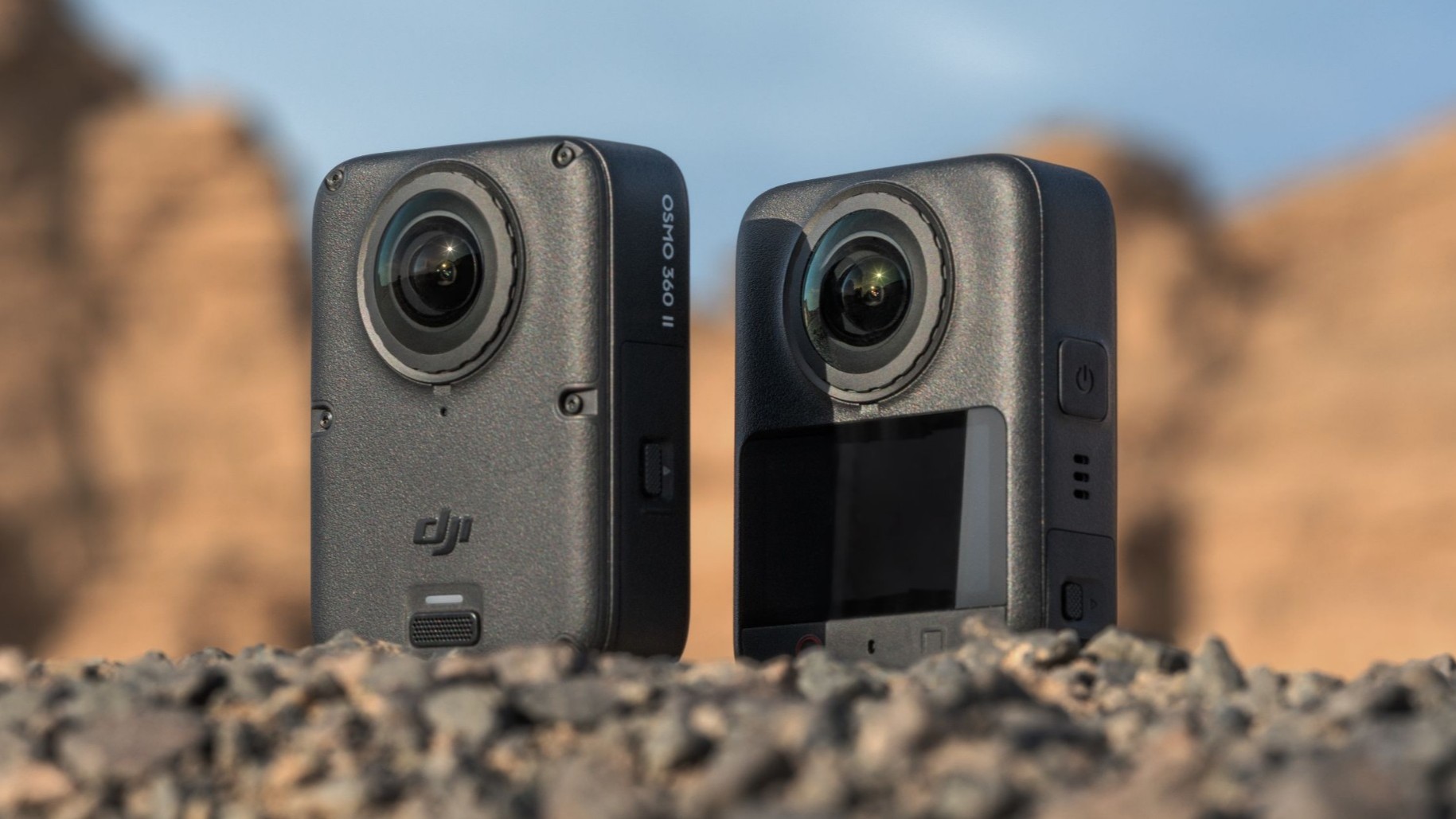
The Insta360 X6, DJI Osmo 360 II, and GoPro MAX2 are three current flagship consumer 360 cameras, and their published specifications differ most clearly in maximum video bitrate, native waterproof rating (20m vs. 10m/50m-with-case vs. 5m), and file formats (INSV, OSV, and .360/.MP4 respectively). Standard maximum bitrate: Insta360 X6 240 Mbps, DJI Osmo 360 II 220 Mbps, GoPro MAX2 200 Mbps with firmware v1.30 or later. GoPro MAX2 can reach up to 300 Mbps through the optional GoPro Labs firmware. No hands-on testing, side-by-side footage comparison, or lab measurement was performed for this article. Every figure below comes from official manufacturer product pages, specification pages, user manuals, firmware changelogs, or support documentation. This comparison does not declare an overall "winner"; it documents what each manufacturer states and flags what cannot be known from specifications alone.
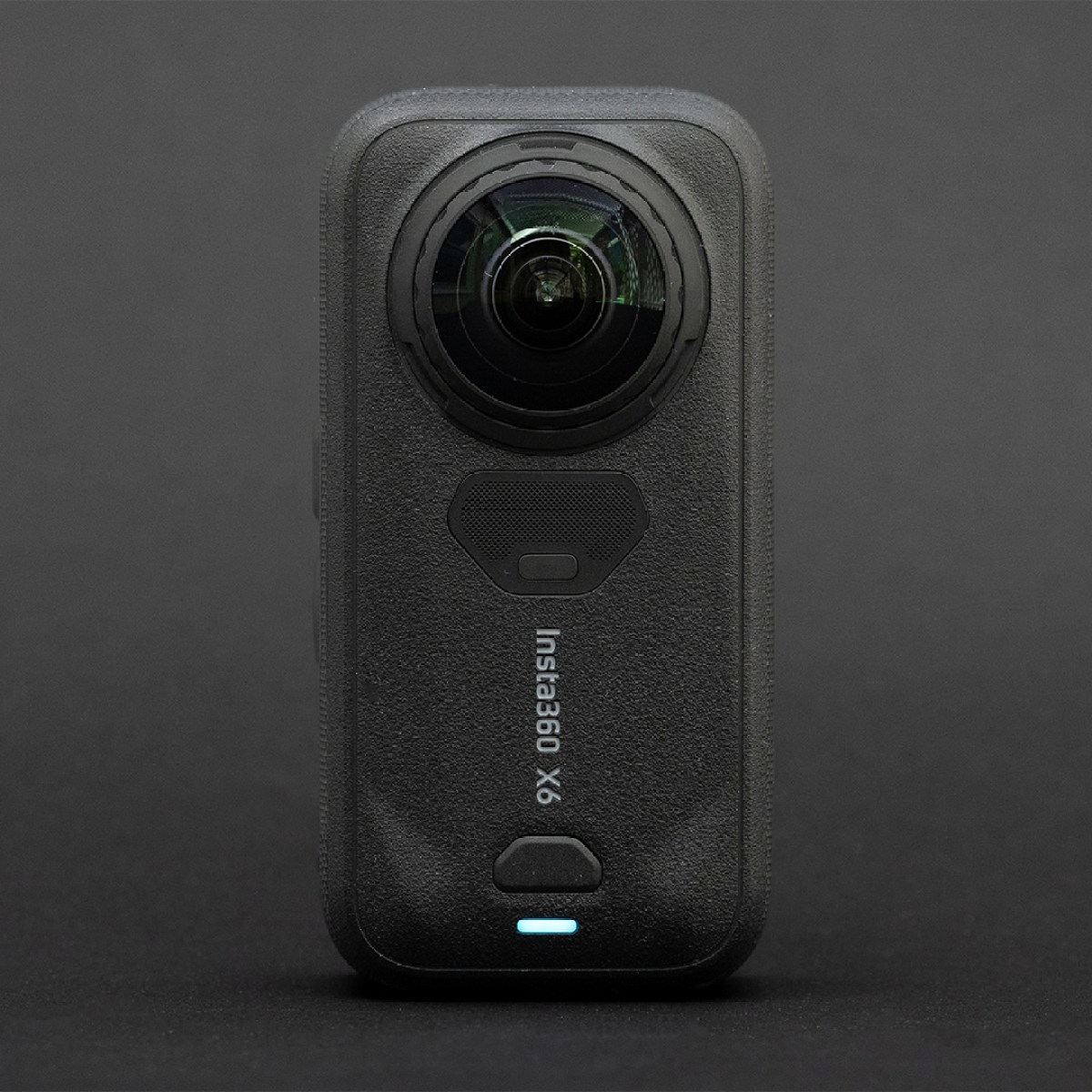
Key differences at a glance
- Sensor size: Insta360 X6 and DJI Osmo 360 II both use dual 1/1.1" square CMOS sensors; GoPro MAX2's spec page lists a 1/2.3" sensor.
- Maximum panoramic resolution and frame rate: all three reach 8K, but at different ceilings — X6 tops out at 8K/50fps, Osmo 360 II reaches 8K/60fps, GoPro MAX2's 8K mode is capped at 30fps (with 5.6K reaching 60fps and 4K reaching 100fps). GoPro MAX2 also offers a separate Panoramic Slow Motion mode at 4K/100/200/240fps, which is not a standard-resolution recording mode.
- Maximum bitrate: Insta360 X6 240 Mbps > DJI Osmo 360 II 220 Mbps (600 Mbps for 16K timelapse only) > GoPro MAX2 200 Mbps with firmware v1.30 or later (up to 300 Mbps through GoPro Labs).
- Waterproofing: X6 20m native > Osmo 360 II 10m native (50m with the optional Waterproof Case) > GoPro MAX2 5m native, no separate deep housing found on its spec page.
- Lens replacement: all three manufacturers document user-replaceable outer lens components or lens elements. The replacement mechanisms differ: Insta360 uses Replaceable Lenses 2.0, DJI provides an Osmo 360 II Lens Replacement Kit (sold separately), and GoPro uses twist-and-go field-replaceable lenses.
- Weight: DJI Osmo 360 II is the lightest camera at 183g. GoPro MAX2 weighs 195g, while Insta360 X6 weighs 196g.
Official specifications comparison
| Spec | Insta360 X6 | DJI Osmo 360 II | GoPro MAX2 |
|---|---|---|---|
| Sensor | Dual 1/1.1" square | Dual 1/1.1" square CMOS | 1/2.3" |
| Aperture | f/2.0 | f/1.9 | f/1.8 |
| Max 360 photo | 120MP, 15520×7760 | 120MP, 15520×7760 | 29MP, 7680×3840 |
| Max panoramic video | 8K @50fps | 8K @60fps | 8K @30fps |
| Max bitrate | 240 Mbps | 220 Mbps (600 Mbps, 16K timelapse only) | 200 Mbps with firmware v1.30+ (up to 300 Mbps via GoPro Labs) |
| Waterproof (native) | 20m | 10m (50m with optional case) | 5m |
| Weight | 196g | 183g | 195g |
Video resolutions, frame rates, codecs, and bitrates
| Camera | Regular panoramic video modes, excluding slow motion | Max bitrate | Video format |
|---|---|---|---|
| Insta360 X6 | 8K@50/48/30/25/24fps · 6K@60/50/48/30/25/24fps · 4K@100/60/50/48/30/25/24fps (360); 4K@120fps is a Standard-mode flat resolution, not 360 | 240 Mbps | INSV (360), MP4 (Standard mode), H.265 |
| DJI Osmo 360 II | 8K@60/50/48/30/25/24fps · 6K@60/50/48/30/25/24fps (360). Panoramic Slow Motion: 4K at 100, 200, or 240fps (separate mode) | 220 Mbps (600 Mbps for 16K 360° timelapse only) | OSV, MP4 (HEVC) |
| GoPro MAX2 | 8K@30/25/24fps · 5.6K@60/50/30/25fps · 4K@100/90/60/50fps (360); single-lens up to 4K@60/50/30/25/24fps | 200 Mbps with firmware v1.30+ (up to 300 Mbps via GoPro Labs) | .360 (360-mode), .MP4 (single-lens), H.265/HEVC |
Frame rate and bitrate ceilings affect how much motion and detail a codec can retain before visible compression artifacts appear, but they do not by themselves determine perceived sharpness, stabilization quality, or low-light performance — those depend on additional factors this article does not test.
Photo specifications and file formats
| Camera | Max 360 photo | Single-lens photo | Photo formats |
|---|---|---|---|
| Insta360 X6 | 120MP, 15520×7760 | 42MP, 6528×6528 | INSP (app/Studio export), DNG |
| DJI Osmo 360 II | 120MP, 15520×7760 | 30.72MP, 6400×4800 | JPEG, RAW |
| GoPro MAX2 | 29MP, 7680×3840 | 12MP, 4000×3000 | JPG, GPR (RAW, single-lens only) |
Battery, charging, storage, and physical design
| Camera | Battery | Storage | Weight / dimensions |
|---|---|---|---|
| Insta360 X6 | 2600mAh; 140 min at 8K/30fps Endurance Mode (lab test, 25°C); 80%/24min, 100%/35min with 30W PPS charging | 64GB internal, 47GB usable; microSD UHS-I V30+ | 196g; 50×100×40mm with lenses, 50×100×26.4mm without |
| DJI Osmo 360 II | 2150mAh (8.3Wh); up to 100 min at 8K/30fps (lab test, 25°C, radios off) | 128GB built-in, 105GB usable; microSD to 1TB | 183g; 61×36.3×81mm |
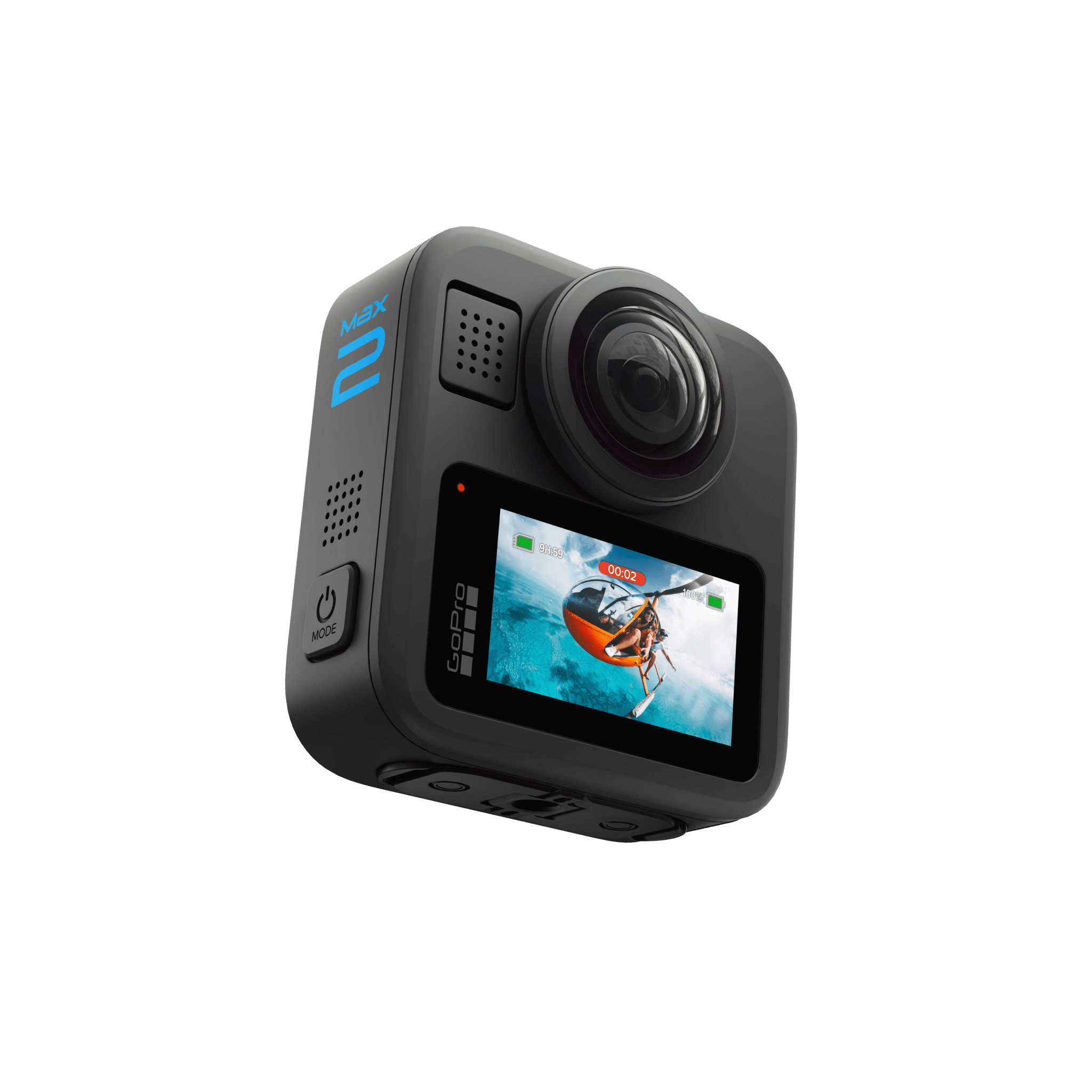
| GoPro MAX2 | 1960mAh Enduro | 1× microSD, class A2 V30+ | 195g; 64×69.7×48.7mm |
DJI Osmo 360 II is the lightest of the three at 183g. GoPro MAX2 weighs 195g and Insta360 X6 weighs 196g — a 13g spread across all three, not a clear-cut size/weight advantage for any single model. No thermal, overheating, or sustained-recording-under-load data is included in this table — none of the three manufacturers publish thermal-cutoff specifications, and no independent thermal testing was performed for this article. Battery-life figures above are each manufacturer's own lab-condition measurement (fixed temperature, radios/screen off in some cases) and should not be read as guaranteed real-world runtime.
Desktop and mobile software
- Insta360 Studio (desktop) and the Insta360 mobile app are Insta360's documented editing and stitching tools for X-series footage.
- DJI Studio (desktop) and DJI Mimo (mobile) are DJI's documented tools for Osmo 360 II footage; in-app export can apply RockSteady 3.0/HorizonSteady stabilization to panoramic footage.
- GoPro Player for macOS and Windows supports 360 playback and export workflows including HEVC, ProRes, and CineForm. GoPro Quik is GoPro's mobile editing app, used for reframing 360 footage into flat video.
- No officially documented third-party plugin (e.g., for stitching OSV files) was found for any of the three ecosystems during this research pass. Any such workflow should not be presented as manufacturer-endorsed without a direct manufacturer source.
What specifications can and cannot tell you
Manufacturer spec sheets do not determine, and this article does not claim to know, the following: real-world stitching quality at the seam line, actual resolved detail versus nominal pixel count, real dynamic range, low-light noise behavior, color rendering accuracy, real-world stabilization performance in motion, audio quality beyond channel count and stated capture mode, thermal behavior or overheating under sustained recording, real achievable battery life outside controlled lab test conditions, export speed on any given computer, or long-term app reliability. This cannot be determined from manufacturer specifications alone, and no hands-on testing was performed for this article to fill that gap.
Which camera fits each documented requirement?
- Choose the Insta360 X6 if your documented priority is the highest declared maximum bitrate (240 Mbps) and the deepest declared native waterproof rating (20m) among the three.
- Consider the DJI Osmo 360 II if your documented priority is the highest declared panoramic frame rate (8K/60fps), the largest confirmed internal storage (128GB, 105GB usable), the lightest body (183g), or extended-depth use via its optional 50m Waterproof Case.
- Consider the GoPro MAX2 if your documented priority is GoPro's own software ecosystem (GoPro Player, GoPro Quik), officially documented ProRes and CineForm export support through GoPro Player, or field-replaceable lens elements — note it has the lowest standard maximum bitrate (200 Mbps, or up to 300 Mbps via GoPro Labs) and shallowest native waterproof rating (5m) of the three.
- No winner can be determined from specifications alone. Image quality, stitching, and stabilization differences require direct comparative testing, which this article does not provide.
Limitations of this comparison
- No direct hands-on testing of any of the three cameras was performed.
- No original footage or photo files from any camera were compared.
- No thermal testing was performed; no thermal-cutoff data is published by any manufacturer for these models.
- No independent bitrate measurement was performed; all bitrate figures are manufacturer-declared.
- No stitching-quality evaluation was performed.
- Prices and firmware versions change over time; figures here reflect what was verifiable as of 2026-08-14 and should be reconfirmed against manufacturer pages before relying on them.
Technical conclusion
Insta360 X6 has the highest manufacturer-declared standard bitrate at 240 Mbps, followed by DJI Osmo 360 II at 220 Mbps and GoPro MAX2 at 200 Mbps with firmware v1.30 or later. GoPro MAX2 can reach 300 Mbps when using GoPro Labs. The DJI Osmo 360 II declares the highest panoramic frame-rate ceiling, the largest internal storage, and the lightest body among the three, plus the deepest waterproof rating when used with its optional case. The GoPro MAX2 offers officially documented ProRes and CineForm export support through GoPro Player and the highest configurable bitrate ceiling via GoPro Labs, but the lowest standard bitrate and shallowest native waterproof rating of the three. No absolute winner is declared — the right choice depends on which of these documented parameters matters most for a given use case, and several important quality dimensions (detailed above) are not determinable from specifications at all.
Frequently asked questions
Is the DJI Osmo 360 II a real product? Yes. DJI publishes a dedicated specification page for it at dji.com (path /360-2/specs), distinct from the original Osmo 360, with its own battery, bitrate, and frame-rate figures.
Is ProRes uncompressed? No. Apple describes ProRes 422 HQ as visually lossless, not uncompressed — it is a compressed codec designed to minimize visible quality loss, not to eliminate compression entirely.
Does the GoPro MAX2's six-microphone array record spatial surround audio? No. GoPro's own spec page describes the array as capturing 360° audio in stereo, plus separate directional audio tied to the selected digital lens — not multichannel spatial surround audio.
What is GoPro MAX2's maximum video bitrate? 200 Mbps with official firmware v1.30 or later, and up to 300 Mbps through the optional GoPro Labs firmware, per GoPro's own MAX2 product documentation.
Which camera has the best image quality? This cannot be determined from manufacturer specifications alone. No hands-on comparative testing was performed for this article.