
Insta360 shipped the X6 on August 12, 2026, and the review embargo that lifted alongside it was unusually one-sided. Engadget landed on 8.9/10. CNET called it, without qualification, "the best 360 camera" you can currently buy. That's a lot of agreement for a category that's normally split between GoPro loyalists and Insta360 loyalists, so it's worth digging into what actually changed and whether it matters for the way most people shoot 360° footage.
What's Actually New
The headline spec is the sensor. The X6 uses two custom square Sony sensors at 1/1.1 inch, up from the 1/1.28-inch sensors in the X5 — Insta360 says that's 33% more sensor area, which in practice means close to four times the light captured per frame. That single change is the reason every review mentions low-light footage first.
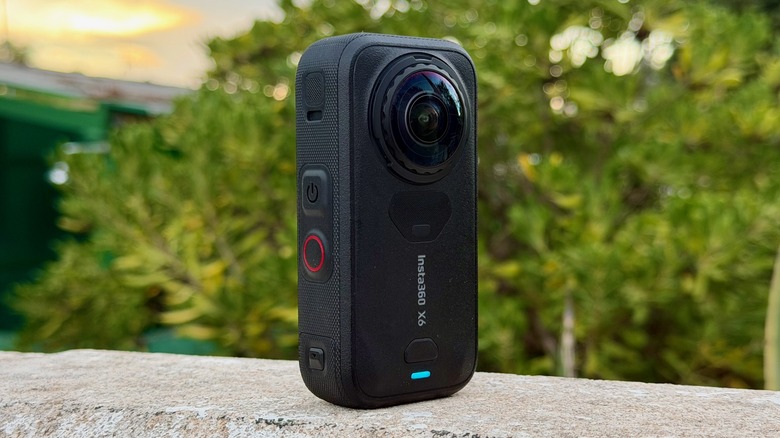
On paper, here's what moved between generations:
- Video: 8K at 50fps in 360 mode (up from 8K30 on the X5), plus 5K60 and 4K120 in single-lens mode
- Photos: 120-megapixel spherical stills, up from 72MP
- Color: native Dolby Vision recording — a first for a 360 camera — plus 10-bit I-Log, where the X5 was capped at 8-bit
- Storage: 64GB built in (47GB usable), so the camera can record without a microSD card at all
- Battery: a 2,600mAh cell rated for about 140 minutes at 8K30, versus roughly 93 minutes on the X5 — Insta360 lists that as a 51% gain
- Weight and size: 196g and a body that dropped from 124.5mm to 100mm tall, closer to a large phone than the previous design
The Night Video Difference
This is where the reviews stop being polite. HDblog's testing singled out low-light and night performance as the biggest practical gap between the X6 and everything else on the market right now, crediting a mode Insta360 calls PureVideo alongside the bigger sensors — not just cranked-up ISO, but active noise reduction that holds onto detail in dark scenes. 360 cameras have historically been rough after sunset; footage turned to mush the moment the light dropped. Reviewers describe the X6's night clips as approaching what a good phone camera can do, which is a real shift for the category rather than an incremental bump.
Dynamic range holds at roughly 13.5–14.5 stops depending on the source, and the standard color profile handles high-contrast scenes — bright sky, dark foreground — without the usual blown-out highlights.
Design Changes That Aren't Just Cosmetic
The shrunken body isn't only about pocketability, though that's part of it. A shorter camera creates less wind resistance on a helmet or side mirror mount, which several reviewers noted actually improves footage stability at speed — less physical wobble means less work for the stabilization software. The rear no longer has dedicated record and menu buttons; those functions moved into the touchscreen itself, with a firm-press interface specifically designed to avoid accidental taps while the camera is in a pocket or on a moving vehicle.
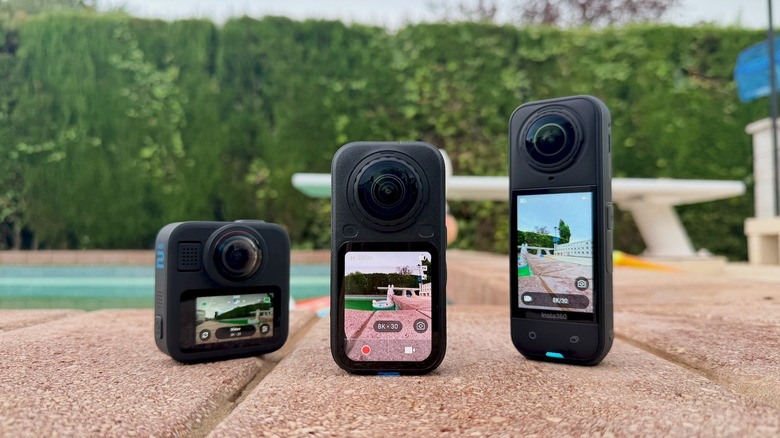
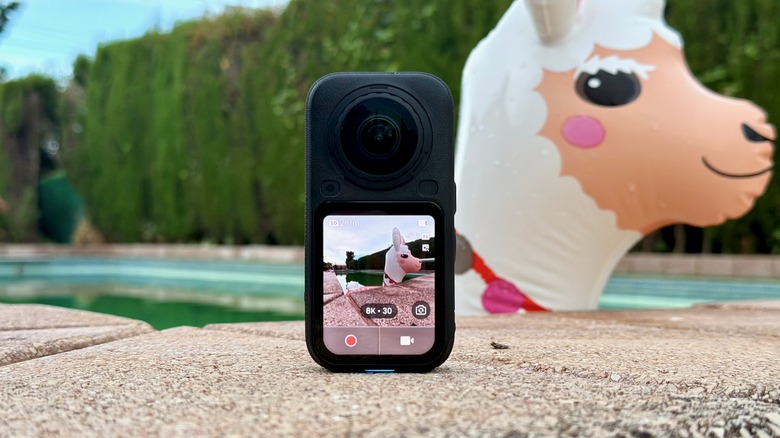
The screen itself is a genuine upgrade: a 2.32-inch OLED panel at 1,200 nits, replacing the older LCD. Reviewers who shot outdoors in direct sun reported no trouble reading the preview, which wasn't always true of earlier models. Lenses are also replaceable — Insta360's second-generation lens system is rated five times more scratch-resistant than the original and about 60% cheaper to swap out if you do damage one, which matters given that Engadget flagged the exposed lens design as carrying real drop risk.
Where the X6 Still Struggles
No review treated it as flawless. Stitch lines — the visible seam where the two lenses' footage gets blended — are still noticeable when a subject crosses directly through the overlap zone, a persistent limitation of dual-lens 360 systems rather than something Insta360 fixed here. The 47GB of onboard storage is generous for a camera that previously had none, but it's about half of what DJI's Osmo 360 offers. And the AI auto-edit tools, while genuinely useful as a starting point, were described by Engadget as never quite producing a clip worth sharing without at least some manual trimming.
Audio is serviceable for ambient sound and wind reduction thanks to the new 360° microphone array, but if dialogue matters — vlogging, interviews — you'll still want an external mic over Bluetooth.
Price and Who Should Actually Upgrade
The X6 ships in two configurations: a €699 Standard bundle and a €799 Essentials bundle with the selfie stick and extra battery. That undercuts nothing — the DJI Osmo 360 sits around $400 and the GoPro Max 2 around $300 — so the X6 is explicitly positioning itself as the premium option, not the value one.
If you're shooting professionally, doing color grading, or regularly filming in mixed or low light, the sensor and 10-bit upgrade alone justify the jump. If you already own an X5 and mostly shoot daylight action clips for social media, the gap is smaller than the marketing suggests, and CNET's own review says as much — this is closer to a strong refinement than a reason to immediately replace a working camera.
Getting X6 Footage Online
Whichever 360 camera you're shooting on, raw equirectangular files aren't much use sitting on a memory card. Once you've pulled clips off the X6 (or any 360 camera), Mirame360's upload workflow walks through getting a video or panorama hosted and encoded for web playback, and the embed guide covers dropping a finished tour or clip straight into a website with a copy-paste iframe or an auto-detected link — no plugin required on most platforms. If you want to see what other creators are publishing before diving in, Mirame360's explore page is a reasonable place to browse real 360 content shot on a range of cameras, X6 included as it starts showing up.
The short version: the X6 is a real step forward, mostly because of a sensor upgrade that fixes 360 video's weakest point — the dark. Whether that's worth $700 depends entirely on whether you were already bumping into that limitation.