If you are looking for a way to publish and share 360° photos or videos online, you have likely come across Matterport. For years, Matterport has been the undisputed heavyweight in commercial real estate, known for creating full 3D spatial digital twins and interactive "dollhouse" floor plans. However, if your primary goal is to host panoramic photography, embed high-resolution 360° video on a website, or showcase spaces without taking on expensive monthly software subscriptions, Matterport often feels like renting a massive commercial crane just to hang a picture frame.
Mirame360 takes a fundamentally different approach. Designed as an open, accessible 360° photo and video hosting platform, Mirame360 focuses on instant browser-based playback, flexible equirectangular media uploads, and zero-subscription hosting for standard creators. This honest comparison breaks down how the two platforms compare in pricing, workflow simplicity, feature gaps, and which platform actually fits your workflow.
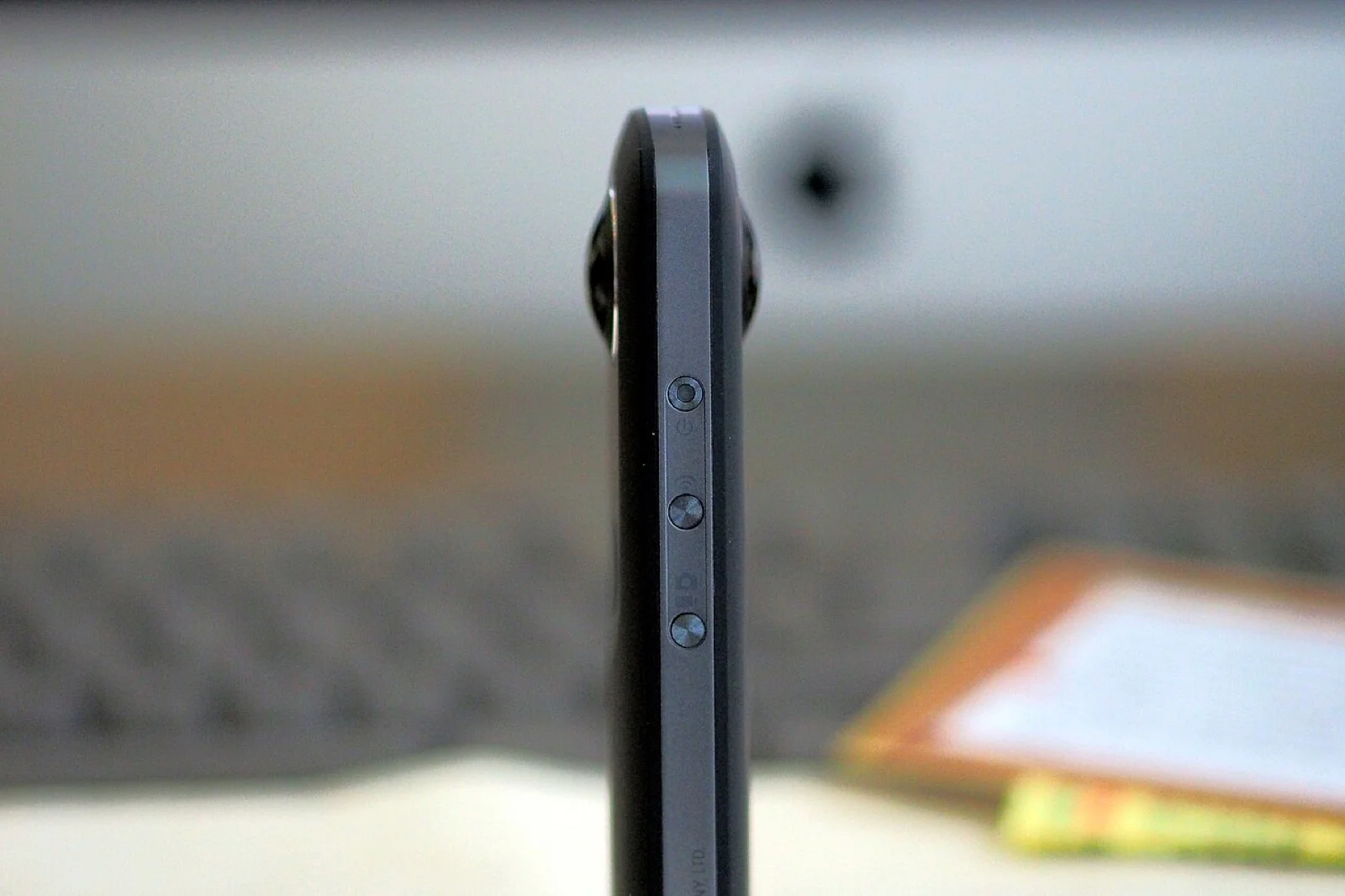
 Compact 360° dual-lens cameras allow fast capture for open hosting platforms. Photo: othree, CC BY 2.0, via Wikimedia Commons.
The Core Difference: 3D Digital Twins vs. Open 360° Media Hosting
To understand why these platforms differ so drastically in price and usability, you first have to look at what they are building behind the scenes.
Matterport is built around volumetric 3D reconstruction. When you scan a space with Matterport's mobile app or their $5,995 Pro3 LiDAR camera, the software calculates depth, stitches multi-point spatial alignments, and generates a textured 3D polygon mesh. That spatial mesh powers Matterport’s trademark features: automatic "dollhouse" views, precise room measurement tools, and schematic architectural floor plans.
Mirame360, on the other hand, is built specifically for high-fidelity 360° photo and video streaming. It treats your camera output as native equirectangular projections—the universal standard used by consumer and professional 360° cameras like the Insta360 X4, GoPro MAX, Ricoh Theta, and Insta360 Pro 2. Instead of building a heavy 3D mesh that requires proprietary player runtimes, Mirame360 processes your equirectangular image or video, optimizes it for fast web delivery, and renders it through an ultra-smooth WebGL viewer.
If your project requires exportable point clouds for architectural CAD software, Matterport’s approach is essential. But if you want to showcase a venue, publish immersive travel video, or embed interactive 360° property walkthroughs on your own website, generating a heavy 3D mesh adds unnecessary expense and upload friction. You can see live examples of how instant panoramic streaming looks in action on Mirame360's explore page.
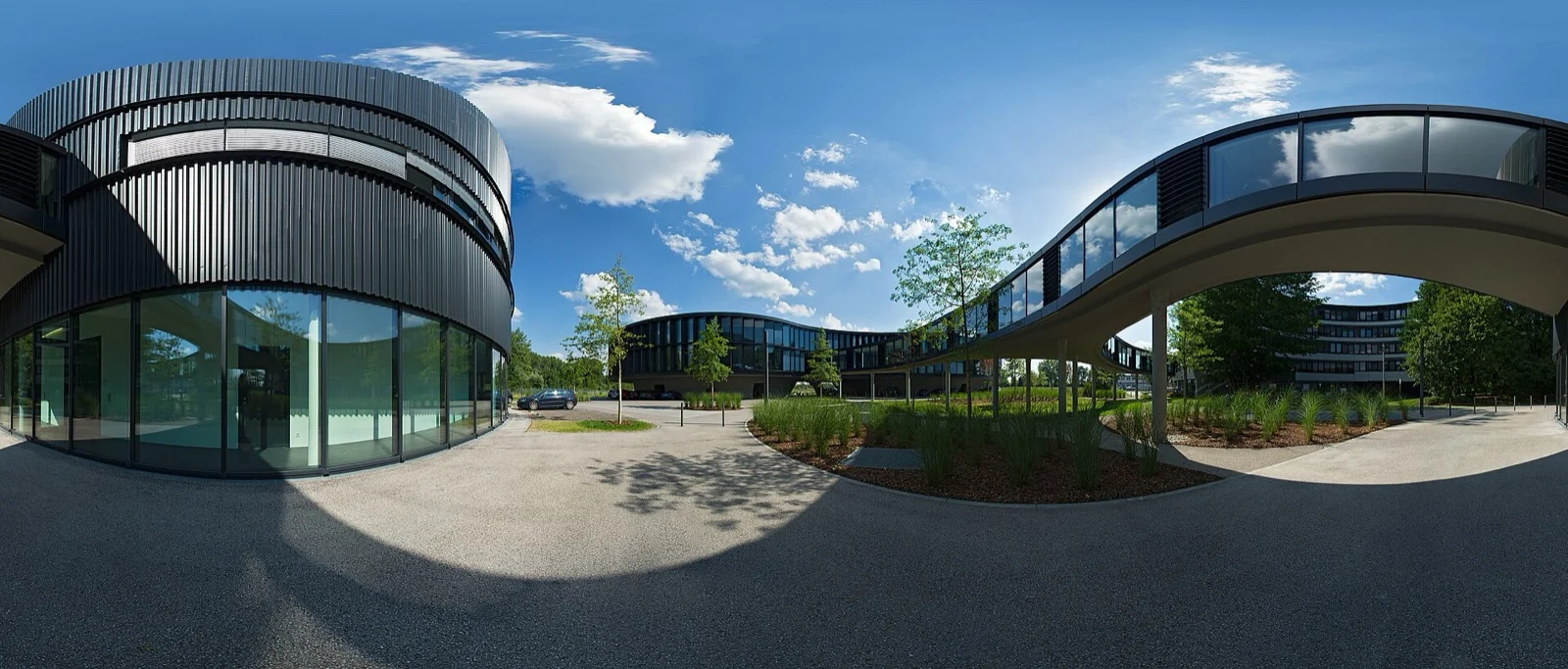
 Equirectangular projection frames store full 360° spherical visual data. Photo: Forum Vulgaris, CC BY-SA 4.0, via Wikimedia Commons.
Pricing Models: Active Space Hostage Fees vs. Open Hosting
The biggest divide between Matterport and Mirame360 is how they handle hosting costs and storage limits over time.
Matterport operates on an "Active Space" subscription model. An active space is any scan hosted live on Matterport's cloud. Once your account reaches its limit, you cannot publish new spaces without either upgrading your monthly tier or "archiving" older tours (which makes them inaccessible to visitors).
Matterport’s subscription tiers break down as follows:
- Free Tier: $0/month for 1 active space (smartphone capture only, no professional cameras).
- Starter Plan: ~$10–$14/month for 5 to 20 active spaces.
- Professional Plan: ~$69/month for up to 150 active spaces (this is the minimum tier required if you shoot with a Matterport Pro2 or Pro3 camera).
- Business Plan: ~$309+/month for up to 300 active spaces.
- Add-on Fees: Extra charges apply for schematic floor plans (
$50 each), MatterPak 3D data bundles ($100 each), and E57 point-cloud files (~$150 each).
The hidden downside of Matterport’s pricing structure is long-term hosting lock-in. If you build 50 virtual tours for real estate listings or local businesses over two years and then cancel your $69/month Professional subscription, all 50 tours immediately go offline.
Mirame360 rejects the subscription hostage model. On Mirame360, standard 360° photo and video hosting is available without monthly active space limits or recurring hosting fees to keep published media live. You upload your equirectangular file, get a clean iframe embed code or share link, and your content remains accessible online. For creators, freelancers, and small business owners who do not want a permanent monthly software bill just to keep old client work alive, this difference alone makes Mirame360 the more sustainable long-term choice.
 Equirectangular projections map a sphere onto a 2:1 rectangular image format for web streaming. Graphic: Strebe, CC BY-SA 3.0, via Wikimedia Commons.
What Matterport Does That Mirame360 Doesn't
To give an honest evaluation, it helps to identify exactly where Matterport excels and why enterprise AEC (Architecture, Engineering, and Construction) firms pay for it.
Automated 3D Mesh & Dollhouse View
Matterport’s algorithm automatically stitches scans into a navigable 3D model. Users can pull back to view a multi-floor building layout like a miniature dollhouse, then click any room to drop down to floor level. Mirame360 does not compute 3D polygon meshes from photo nodes; it links 360° panoramas and video points directly.
Integrated Measurement and CAD Exports
Inside a Matterport space, viewers can select the measuring tape tool to check ceiling heights, wall dimensions, or doorway clearances with impressive accuracy (within 20mm at 10 meters on the Pro3). Architects and construction managers can also purchase downloadable BIM files, MatterPaks, and point clouds directly from the scan. Mirame360 is a visual media host, not a spatial CAD tool, so it does not generate structural measurement files.
Automated Schematic Floor Plans
Matterport can convert a finished scan into a black-and-white 2D schematic floor plan with labeled room dimensions for a separate processing fee. If your clients demand official floor plan PDFs alongside virtual walkthroughs, Matterport automates that step inside its cloud pipeline.
If any of these three features are non-negotiable requirements for your daily work, Matterport is worth its high price tag. For answers to common questions regarding supported media formats and embedding options on lighter platforms, check out Mirame360's FAQ section.
What Mirame360 Does That Matterport Struggles With
While Matterport dominates 3D spatial real estate, it falls behind when handling dynamic motion and standard video workflows.
Native 360° Video Hosting
Matterport is designed almost exclusively for static photo nodes. It cannot host full-motion 360° video. If you record action footage with a GoPro MAX, shoot a driving tour with an Insta360 X4, or record an event in 360° video, Matterport cannot host or stream your file. Mirame360 supports native 360° video uploading and high-bitrate WebGL playback, allowing viewers to pan around dynamic moving footage smoothly in any modern browser.
Hardware Freedom and Camera Agnosticism
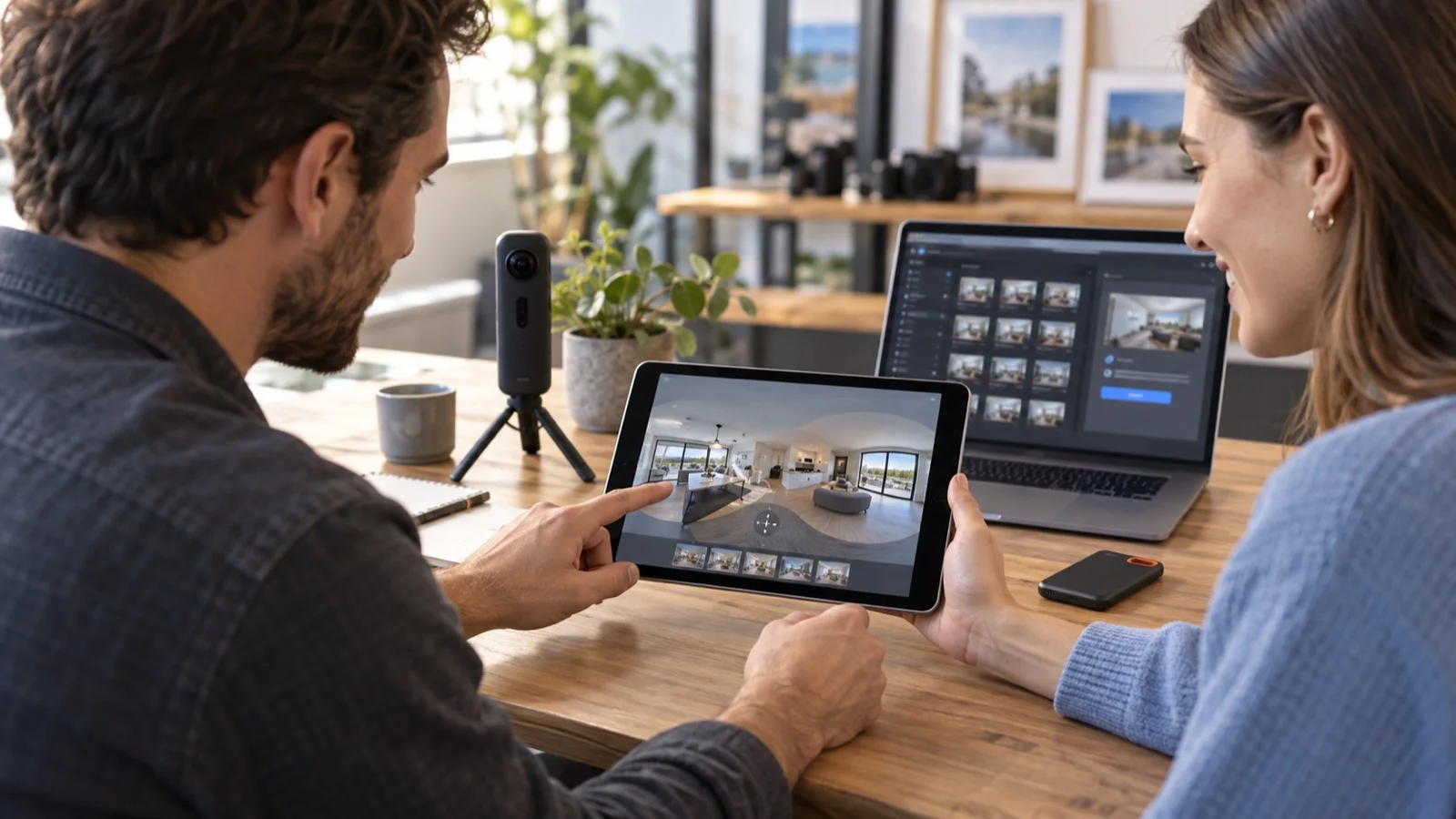
Matterport heavily incentivizes using its proprietary hardware ($5,995 Pro3 LiDAR camera) or paid third-party capture integrations. If you use standard 360° cameras, Matterport restricts which subscription tiers you can join. Mirame360 is completely hardware-agnostic: any camera that outputs standard equirectangular JPEG photos or MP4 videos works instantly without requiring special apps or camera locks.
Instant Embeds and Lightweight Web Performance
Matterport’s 3D viewer downloads significant mesh and texture data, which can result in noticeable load times on low-bandwidth mobile connections. Mirame360 serves lightweight equirectangular streams optimized for quick page loads, making it ideal for embedding directly into website landing pages, blog posts, and online portfolios.
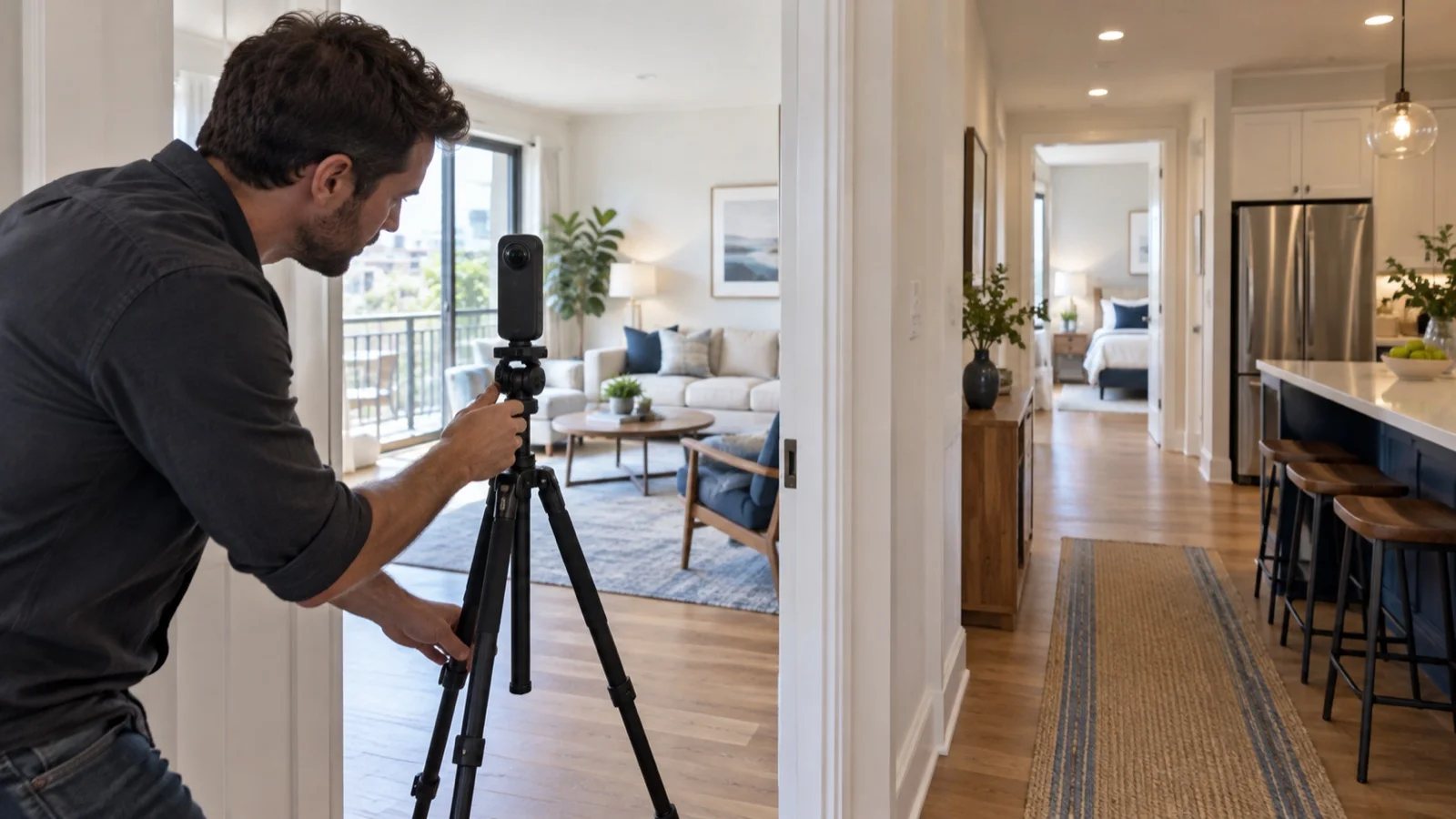
 Capturing spaces with standard hardware keeps production fast and budget-friendly. Photo: Phone Photography, CC BY-SA 4.0, via Wikimedia Commons.
Who Should Pick Which?
Choosing between Mirame360 and Matterport comes down to your core objective and who is paying the hosting bill.
Choose Matterport if:
- You work in commercial real estate, construction, or AEC where clients explicitly require 3D dollhouse models, point clouds, or BIM/CAD integrations.
- You have the budget to invest $6,000 in a Pro3 LiDAR camera and pay $70 to $300+ per month in ongoing subscription fees.
- Your primary deliverable is an architectural scan rather than marketing video or media embeds.
Choose Mirame360 if:
- You are an independent real estate agent, photographer, travel creator, or business owner who wants to showcase properties and venues without monthly hosting fees.
- You shoot with popular 360° cameras (Insta360, GoPro MAX, Ricoh Theta) or standard panoramic photos.
- You need to host and stream 360° video, not just static photo scans.
- You want clean, fast-loading iframe embeds for your website that will stay active long after your project is completed.
Getting Started
You do not need a multi-thousand-dollar camera setup or a complex monthly contract to start sharing immersive 360° experiences online. If you want a fast, zero-friction platform to host your 360° photos and videos today, create a free account at Mirame360's registration page and upload your first equirectangular media file in minutes.